

How to tell if you have a roof leak
The most common signs are brown or yellow stains on ceilings or walls, a musty smell, dripping during or after rain, and a sagging or bulging ceiling. Water often travels before it shows, so the damage may not be directly above the stain. A bulging ceiling is urgent: keep people out from under it and get help quickly.
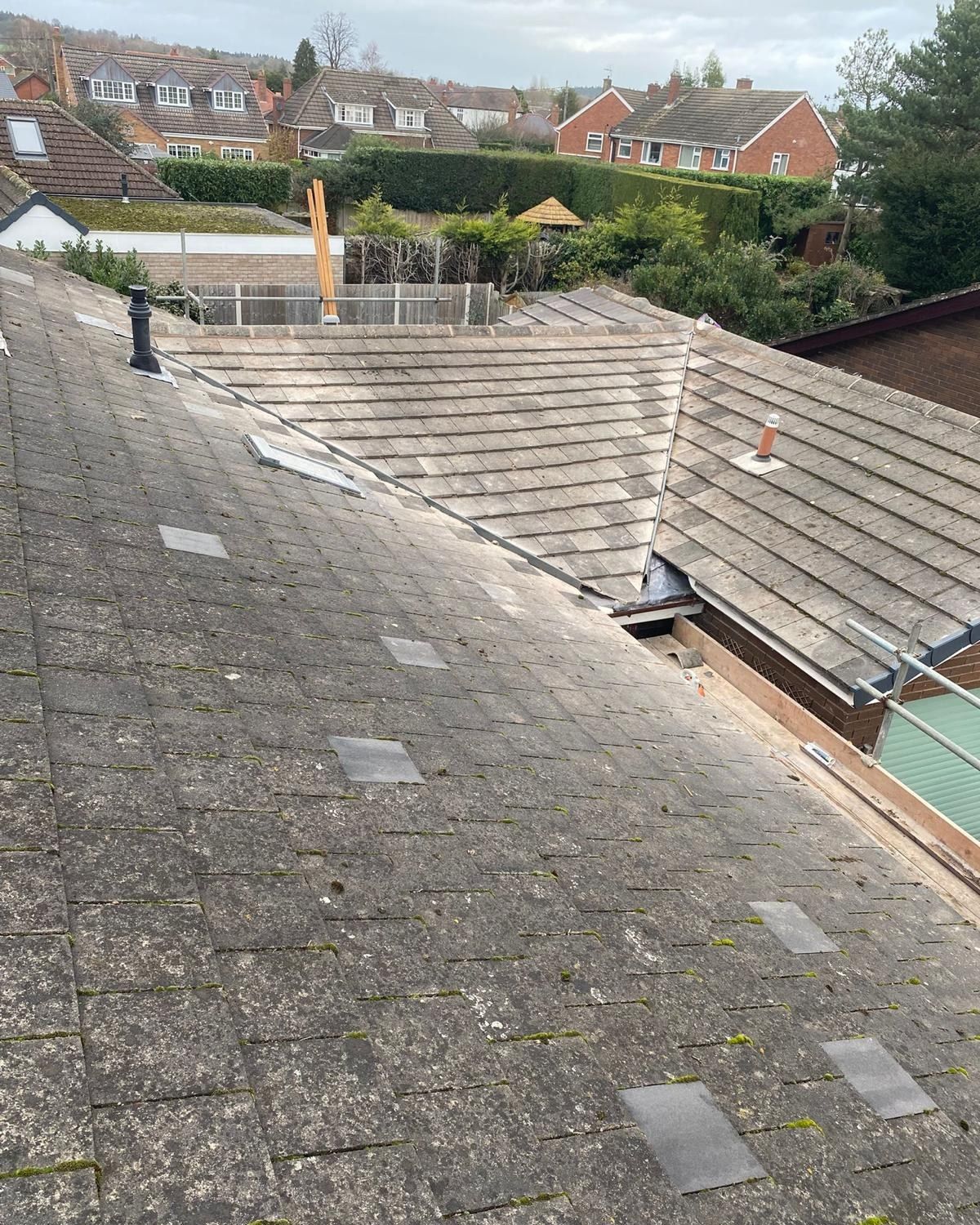
Roof leaks can be hard to pin down, because water rarely comes through the ceiling directly below the damage. It can run along timbers, membranes or pipes before it shows. The sooner a leak is found and fixed, the less damage it does to the building and your belongings. These are the signs to look for.
Water stains on ceilings or walls
Brown or yellow stains on a ceiling or upper wall are one of the most common signs that water is getting in through the roof. A musty smell alongside them can mean mould is developing behind the surface.
A sagging or bulging ceiling
A ceiling that sags or bulges can mean water has been collecting above it for some time. This is serious: in bad cases the weight of trapped water can bring part of the ceiling down. Treat it as urgent rather than waiting to see if it gets worse.
For a leak that needs dealing with straight away, see emergency roof repairs.
Dripping water
Hearing water dripping inside the house – especially during or shortly after rain – is a fairly clear sign of an active leak. Check the loft and upstairs rooms, and put a container under any drip you can reach safely.
Water pooling on a flat roof
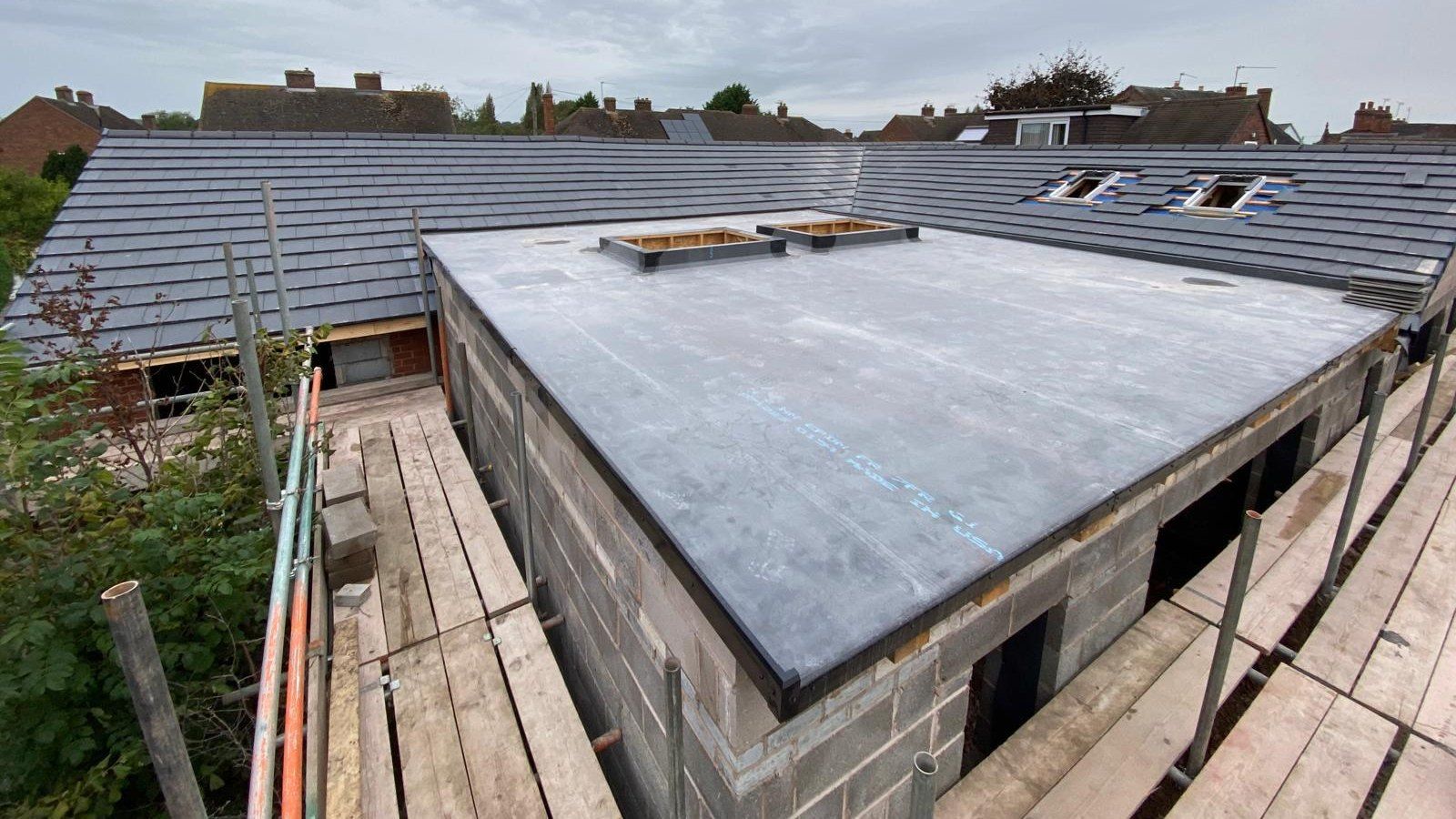
Roofs, flat roofs included, are designed to shed water quickly. If you can see from an upstairs window that water is sitting in one area instead of draining away, it often points to a blocked outlet, a dip in the roof surface or damage to the waterproof covering.
Missing, slipped or cracked tiles
Damaged tiles are one of the most common causes of leaks. Once a tile has cracked or slipped, water has a direct route underneath the roof covering and into the structure. You can usually spot these from the ground or a window with binoculars.
Blocked or overflowing gutters
If gutters are blocked or damaged, water can back up at the roof edge and find its way under tiles or flashing instead of draining away. In very cold weather, snow or ice at the roof edge can melt and refreeze, which can hold water back in the same way. Keeping gutters clear – especially before winter – helps, but have it done by someone with safe access. Our guide to winter roof leaks explains more.
Finding the source
You can gather useful clues from inside. After rain, look in the loft with a good torch, stepping only on the joists or boards, for damp timber, wet insulation, drips or daylight showing through. Note where stains appear and when – that helps a roofer narrow things down.
Pinpointing the exact cause usually means a close look at the roof itself, which involves working at height and recognising subtle damage. That’s a job for a professional, who can find the source and recommend the right roof repair. Our article on why roofs leak covers the common causes.
More questions about your project
Can I start an enquiry without identifying the defect?
Yes. Explain what you have noticed and when it happens. A clear description is more useful than trying to diagnose the roof from an unsafe position.
Read more: Can I start an enquiry without identifying the defect?